
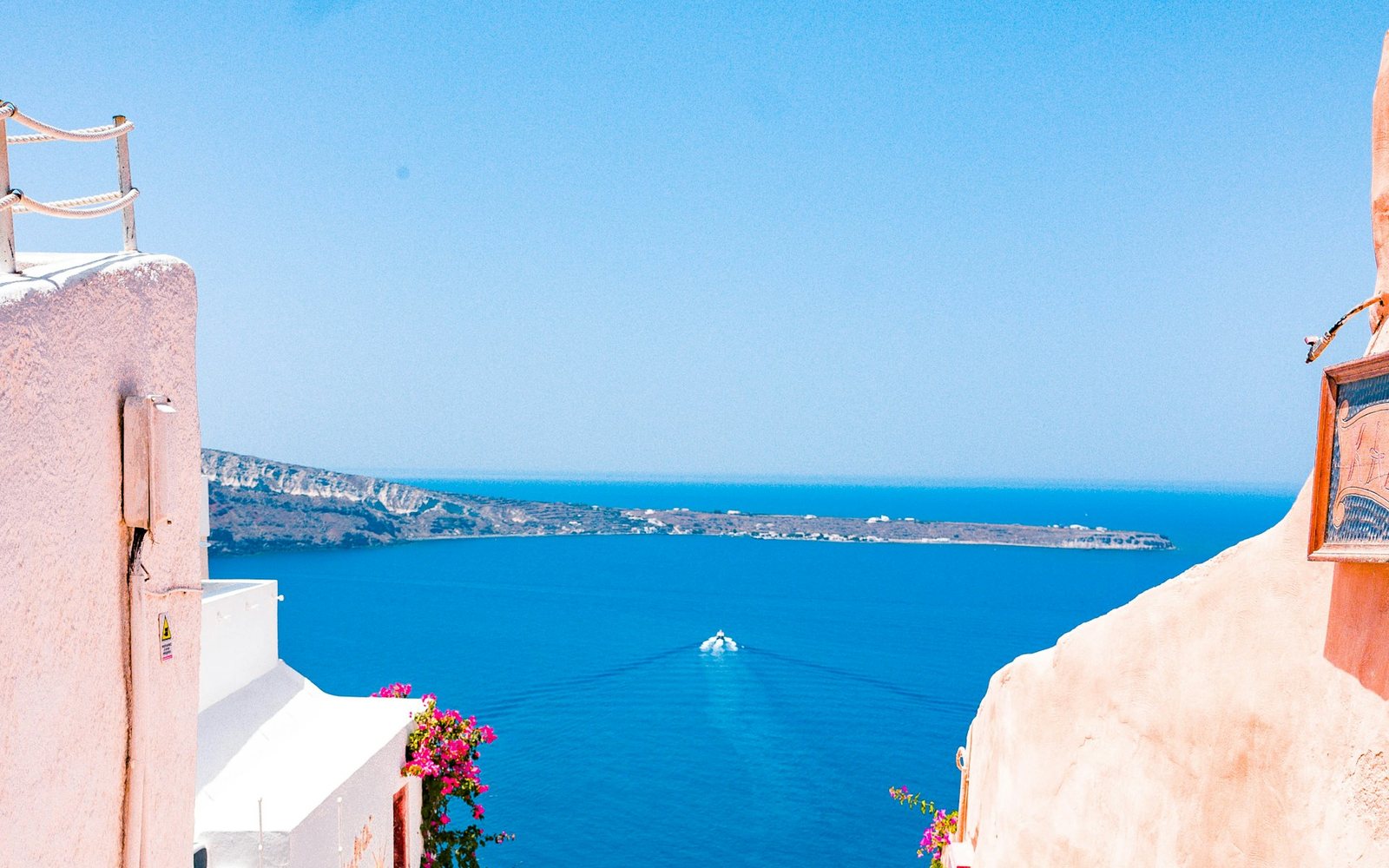
In 2026, Greece attracts families and individuals who want a Mediterranean setting — sea, light, islands — a daily life still more approachable, outside some tight property markets, than in many Western European capitals, and freedom of movement for EU citizens. People come first for Athens, the Attica coast, Thessaloniki or an island. Tax (including an alternative regime for foreign income) and the Golden Visa come next, and their conditions have moved.
This guide describes lifestyle, neighbourhoods, what can officially be said about property, schools, formalities and tax. For other European destinations, see our Italy, Portugal and Malta guides, and the article on buying in Portugal.
Lifestyle and everyday life
Athens is a contrasting capital, between ancient remains, handsome northern suburbs, the Attica riviera waterfront, and a centre that is sometimes chaotic, always alive. The summer is very hot; the sea, at Glyfada or Vouliagmeni, changes daily life. The metro, tram and buses cover a large metropolitan area; the car remains common towards the northern suburbs. Greek is the language of officialdom and of a large part of daily life; English is common in international circles and tourism, insufficient to settle everything.
Outside Athens, the country changes: Thessaloniki has the pace of a large northern city, more compact. Crete, Corfu, the Cyclades or the Peloponnese offer another calendar, highly dependent on the season, air links and services (healthcare, schools) available year-round. A plan “on an island” should be visited out of season. Greece also has its constraints: administration that can be slow, fires in some years, tourist pressure on already saturated islands.
Where to live: Athens, the riviera, Thessaloniki, the islands
The centre, Kolonaki, the north (Kifissia, Psychico)
Kolonaki and the slopes of Lycabettus remain an urban address, close to the museums and to some of the schools. Further north, Kifissia, Psychico and Filothei attract families who want houses, gardens, and proximity to the Lycée franco-hellénique Eugène Delacroix and other international schools. Journey times to the centre should be measured. The market there is in demand.
The Attica riviera: Glyfada, Vouliagmeni, Palio Faliro
The waterfront, from Palio Faliro to Vouliagmeni and on towards Cape Sounion, appeals to those who want the sea in daily life, often more recent buildings, and a slightly more “coastal” pace. Glyfada has a town life; Vouliagmeni a more residential and expensive character. It is a market distinct from the centre, also tight in the most sought-after segments.
Thessaloniki and the islands
Thessaloniki offers a complete city, a cultural scene, a cost often more approachable than central Athens, and access to northern Greece. On the islands, the right choice depends on the presence of a school (or acceptance of boarding or distance learning), a hospital, winter connections, and a property market sometimes heavily marked by tourism and, where relevant, by demand linked to residence titles. Visit out of season.
Advantages and points to watch
Advantages
- A Mediterranean climate, the sea, islands, and a daily life still cheaper, outside tight property in some areas, than in many Western European capitals.
- Freedom of movement for EU citizens; Greek helps, English is common in international circles.
- The Lycée franco-hellénique Eugène Delacroix in Athens, and international schools.
- Healthcare: a public system (ESY) for affiliated residents, and a private sector.
- A tax framework that includes, among other things, an alternative regime for foreign income, to be reviewed in its version in force.
Points to watch
- The property market has risen sharply in several areas (Athens, some islands): only the Bank of Greece’s official indices measure the pace, not a listings average.
- Administration can be slow; Greek is a genuine advantage.
- Tourist pressure and, in some years, fires and water stress on islands.
- Golden Visa thresholds have been raised in the main markets: they should be read at source, not from memory.
- For British nationals, no more EU free movement: a residence title is required.
Property: official indices, an up-to-date Golden Visa
This page does not publish a listings average price. The Bank of Greece publishes a quarterly apartment price index, by geographical area and by age of the property. Consult its latest official press release for the annual and quarterly pace in force: that is the source to use for a trend, not a property portal. ELSTAT also publishes useful statistics. A flat in Kolonaki, a house in Kifissia and a Cycladic property do not belong to the same market.
Purchase costs (duties, notary, lawyer, cadastre / registry) fall under Greek law and should be costed with a local professional. Property tax (ENFIA) weighs on ownership. An independent lawyer and a title check, in a country where cadastral history can have been complex, are good practice.
The Golden Visa (a residence title linked to an investment, including property) has had its thresholds substantially raised for the main urban and island markets. The amounts, zones and eligible property types in force should be read on the Enterprise Greece and competent ministry pages, at the date of your plans. This page does not freeze an old threshold, and a purchase is only relevant, for this purpose, if it matches the current rules and a real life plan.
Schools and family life
The Lycée franco-hellénique Eugène Delacroix, in Athens, an AEFE-network school, is the anchor for French-speaking families. Admissions should be checked with the school. This page does not publish pupil numbers. International schools and the Greek public system complete the offer. Outside Athens, the French-language offer is much more limited: that is often a decisive criterion against, or for, an island. Family life in Athens also rests on the sea, a dense cultural calendar, and a long-established community.
How many French nationals in Greece?
At 1 January 2025, the French Foreign Ministry’s voluntary register recorded 8,698 enrolments in Greece, after 8,536 in 2024 and 10,072 in 2017. The series fell to 7,806 in 2021, then recovered a little. Registration is voluntary. These official figures correct ranges (“7,000 to 9,000”) and charts sometimes sloping upwards without relying on this series.
Registration on the register of French nationals established outside France is voluntary. These official counts therefore understate the actual community. Source: French Foreign Ministry, community CSV files, registrations at 1 January.
Residency, formalities and healthcare
EU, EEA and Swiss citizens benefit from freedom of movement; a registration formality is required beyond three months. British nationals, since Brexit, need a residence title according to the purpose (employment, family, investment, and so on).
The public health system (ESY) is available to affiliated residents (employment, an S1 form, another title). The private sector is widely used, especially in Athens. Suitable cover, pending affiliation, is wise. The European Health Insurance Card covers a temporary stay, not a relocation.
Tax in 2026 — what is useful to know next
Greek tax residents are in principle taxed on their worldwide income, on a scale, with ENFIA among the charges on property. Greece provides an alternative tax regime for foreign-source income (often called non-dom), set out in law, subject to an annual lump-sum tax and to residence and investment conditions. A specific regime applies to certain pensions. The amounts, conditions and durations in force should be checked with AADE and with an adviser: this page does not replace the official scale, which may have been adjusted.
If you leave France, the French exit tax on certain unrealised gains may apply. For a departure to an EU Member State, deferral of payment is in principle automatic. Relief after two or five years, as the case may be, is still described on impots.gouv.fr (page updated on 10 March 2026). A proposal to extend the period to fifteen years has been discussed; it is not in force at the date of this page. Have your position reviewed by an adviser.
A Greece plan should be built in this order: the place (and the school), a home whose title has been checked, a residence title if one is needed, then an up-to-date tax review — including, where relevant, the alternative regime and the current Golden Visa thresholds, if they are genuinely the purpose.
Frequently asked questions
How many French nationals live in Greece?
At 1 January 2025, the French Foreign Ministry’s voluntary register recorded 8,698 enrolments in Greece, after 8,536 in 2024 and 10,072 in 2017. The series fell until 2021 (7,806), then recovered a little. Registration is voluntary. This page corrects ranges and charts sometimes quoted without relying on this official series.
What is known about property prices?
This page does not publish a listings average. The Bank of Greece publishes a quarterly apartment price index, by geographical area and by age of the property. Consult its latest official press release for the annual and quarterly pace in force. ELSTAT also publishes useful statistics. A home in Kolonaki, in Kifissia, in Piraeus or on a tourist island does not belong to the same market.
What is the Greek Golden Visa?
Greece provides a residence title linked to an investment, including a property investment, with thresholds that depend on the place and the type of property, and that have been substantially raised for the main urban and island markets. The official amounts and conditions in force should be read on the Enterprise Greece and competent ministry pages, at the date of your plans. This page does not freeze a threshold that would belong to an old version.
Is there a “non-dom” tax regime?
Yes. Greece provides an alternative tax regime for foreign-source income, set out in law, subject to an annual lump-sum tax and to conditions of tax residence and investment. A specific regime also exists for certain pensions. The amounts, conditions and durations in force should be checked with the tax authority (AADE) and with an adviser. This page does not replace that scale.
Where should I settle?
In Athens, many families look at Kolonaki, Kifissia, Psychico, Glyfada, Vouliagmeni or Palio Faliro, depending on the school (including the Eugène Delacroix lycée) and their relationship with the sea. Thessaloniki is another, more compact, city. The islands (Crete, Corfu, the Cyclades) offer another daily life, highly dependent on the season and on services.
Do EU citizens need a visa?
Citizens of the EU, the EEA and Switzerland benefit from freedom of movement. A registration formality is required for a stay of more than three months. British nationals, since Brexit, fall under a residence title according to the purpose (including, where relevant, the Golden Visa).
Are you thinking of moving to Greece?
Leave your details and we can talk through the practical side of your plans — city, housing, schools, formalities. A personal conversation, with no obligation.