

In 2026, Malta attracts individuals and families who want an EU Member State, in the euro area, where English is an official language, with a Mediterranean setting, remarkable heritage and a tiny territory. People come first for that daily life — the sea, Valletta, officialdom that can be approached in English — more than for a large French community. Tax and residence programmes come next, and they should be read in their current official version.
This guide describes lifestyle, the localities, what can officially be said about property, schools, formalities and tax. It also corrects an important point: the French consular register recorded 1,027 enrolments at 1 January 2025, not the “2,000 to 3,000” sometimes quoted. For other European shores, see Italy, Greece, Portugal and the article on buying in Portugal.
Lifestyle and everyday life
Malta is small: you can cross the main island in less than an hour. Valletta, a fortified capital and World Heritage site, the Three Cities on the other side of the Grand Harbour, Mdina inland, and the east coast (Sliema, St Julian’s) make up very different daily lives within a few kilometres. English and Maltese are official; in practice, an English speaker can deal with officialdom, healthcare and school without a language barrier comparable to that of many other destinations. That is a real advantage, especially for a British national.
The climate is Mediterranean, with a very hot, dry summer and constrained water resources. Density, construction and traffic, especially on the east coast, are the main complaint of those who settle. Gozo, the sister island, offers a more rural pace, at the price of a ferry. Tourism, intense in season, is part of the landscape. Cultural life (theatre, music, village feasts) is richer than one sometimes expects of such a small territory.
Where to live: Valletta, Sliema, Gozo
Valletta and the Three Cities
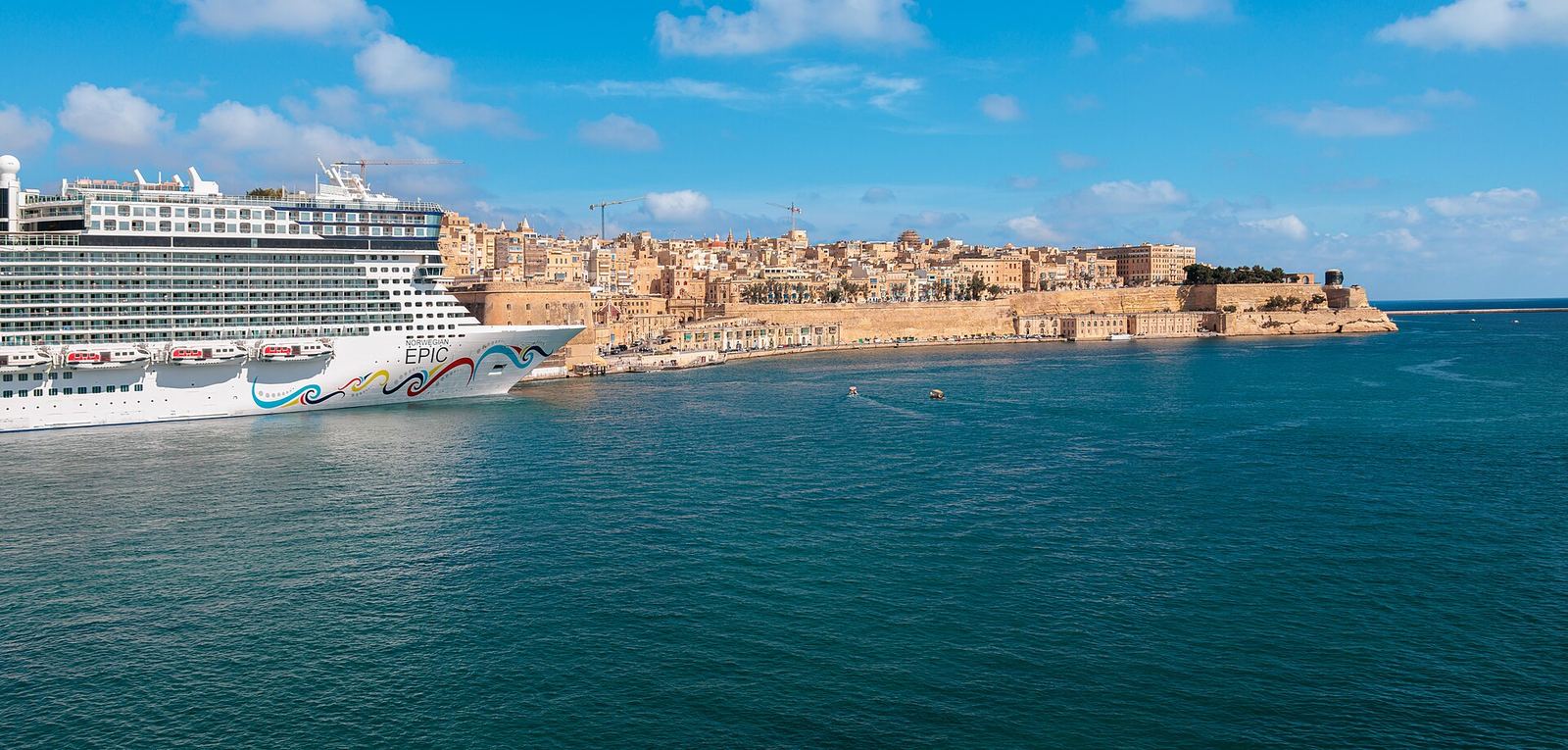
Valletta offers heritage, walking, palaces, the life of a capital in miniature. Housing there is often in old buildings, to be renovated or already restored, with conservation constraints. Across the harbour, Birgu (Vittoriosa), Bormla (Cospicua) and Senglea (L-Isla) have a more local character, and are changing, with views over the Grand Harbour — the same harbour as in the photograph at the top of this page, taken by Terry Ott.
Sliema, St Julian’s, Gżira
The east coast concentrates apartments, restaurants, part of the international community and greater density. Sliema and St Julian’s (Paceville in the evening) are practical, urban, and more exposed to construction and traffic. It is a market in demand, to be visited at different hours, and to be judged also on the quality of the building — which is very uneven.
Mdina, Mellieħa, Gozo
Mdina and the hinterland offer a quieter, more “village” daily life. Mellieħa, in the north, gives more access to the sea and a slightly less dense pace. Gozo (Victoria, the villages, the coves) appeals for a more residential plan, with more limited services and a dependence on the ferry. For a family, the school and medical offer of the chosen island is the first filter.
Advantages and points to watch
Advantages
- English is an official language, alongside Maltese: a major advantage for official, school and medical daily life.
- An EU Member State, in the euro area, with freedom of movement for EU citizens.
- A Mediterranean setting, heritage (Valletta, Mdina), the sea, and a tiny territory, easy to get around.
- Residence programmes and a non-domiciled tax regime, to be read in their official version in force.
- Care available in English, a public sector for affiliated residents, and a private sector.
Points to watch
- A very small, dense territory: traffic, construction, and property pressure in some areas of the east coast.
- The registered French community is limited: 1,027 people at 1 January 2025, far below ranges sometimes quoted.
- No large French lycée comparable to those of Madrid or Athens: the school offer is mainly English-speaking and international.
- A very hot summer, constrained water resources, and an intense tourist pace in season.
- Residence and citizenship programmes have been reformed and debated: only the current official rules are authoritative.
Property: the official NSO index, no listings average
This page does not publish an average price drawn from portals. Malta’s National Statistics Office (NSO) publishes a Residential Property Price Index (RPPI). Consult its latest official release for the annual and quarterly pace in force: that is the source to use for a trend. A new flat in Sliema, a village house in Gozo and a palazzo in Valletta do not belong to the same market. The density of construction, particularly on the east coast, should be seen on the ground.
Purchase costs, duties and the notary’s role fall under Maltese law and should be costed with a local professional. An independent lawyer and a title check are good practice. Non-residents may buy, under the conditions in force; a purchase is not, on its own, equivalent to a tax programme.
Schools and family life
There is no large French lycée in Malta comparable to those of Madrid, Athens or Singapore. Families rely mainly on international and English-language schools, and, where relevant, on the state system — English being official. Check AEFE and Mission laïque listings for any modest French-language options, and international schools for places, curricula and fees. This page does not publish pupil numbers. For a French-speaking family attached to the French baccalauréat, this limit of offer is a decision criterion, not a detail.
How many French nationals in Malta?
At 1 January 2025, the French Foreign Ministry’s voluntary register recorded 1,027 enrolments in Malta, after 1,002 in 2024, a high of 1,366 in 2020, and 1,128 in 2017. Registration is voluntary. These official figures correct ranges of “2,000 to 3,000” and charts that did not rely on the ministry’s series. The community is real, but small, and daily life is organised mainly in English, in an international fabric wider than the French community alone.
Registration on the register of French nationals established outside France is voluntary. These official counts therefore understate the actual community. Source: French Foreign Ministry, community CSV files, registrations at 1 January.
Residency, formalities and healthcare
EU, EEA and Swiss citizens benefit from freedom of movement; a registration formality is required for a lasting stay. British nationals, since Brexit, need a title according to the purpose. Malta also has residence programmes with conditions (investment, a tax minimum, and so on), administered in the framework provided by the Commissioner for Tax and Customs. These programmes, and any schemes linked to citizenship, have been reformed and publicly debated: only the current official rules are authoritative. This page does not treat them as a selling point.
Healthcare rests on a public sector available to affiliated residents, and a private sector, largely in English — a real comfort. Cover pending affiliation remains wise. The European Health Insurance Card covers a temporary stay, not a relocation.
Tax in 2026 — what is useful to know next
Malta applies, for certain people, a non-domiciled regime under which foreign-source income may be taxed on a remittance basis, subject to conditions and to any minimums set by law. Residence programmes (including the Global Residence Programme and schemes aimed at EU residents, according to the texts in force) set out rates and minimums. The whole is administered by the Commissioner for Tax and Customs (CFR). Official conditions should be read on the CFR pages, at the date of your plans, and confirmed with an adviser. This page does not replace that scale, which may have changed.
If you leave France, the French exit tax on certain unrealised gains may apply. For a departure to an EU Member State, deferral of payment is in principle automatic. Relief after two or five years, as the case may be, is still described on impots.gouv.fr (page updated on 10 March 2026). A proposal to extend the period to fifteen years has been discussed; it is not in force at the date of this page. Have your position reviewed by an adviser.
A Malta plan should be built in this order: the place (and, if there are children, a realistic English-language or international school), a home that has been visited, a residence title if one is needed, then an up-to-date tax review. The real size of the registered French community, and the advantage of official English, are two facts to hold together — neither is a slogan.
Frequently asked questions
How many French nationals live in Malta?
At 1 January 2025, the French Foreign Ministry’s voluntary register recorded 1,027 enrolments in Malta, after 1,002 in 2024 and a high of 1,366 in 2020. In 2017 the same register recorded 1,128. Registration is voluntary. This page corrects ranges sometimes quoted of “2,000 to 3,000” and charts that do not rely on this official series.
What is known about property prices?
This page does not publish a listings average. Malta’s National Statistics Office (NSO) publishes a Residential Property Price Index (RPPI). Consult its latest official release for the annual and quarterly pace in force. A flat in Sliema, a house in Gozo and a property in Valletta do not belong to the same market. The density of construction on the east coast is a point to see on the ground.
Do I need to speak Maltese?
Maltese and English are both official. In practice, English is enough for officialdom, healthcare, international school and a large part of daily life — that is one of Malta’s clear advantages, especially for a British national. Learning a few basics of Maltese remains a useful step, not a precondition.
What is the tax framework?
Malta applies, for certain people, a non-domiciled regime under which foreign-source income may be taxed on a remittance basis, subject to conditions and to any minimums set by law. Residence programmes (including the Global Residence Programme and schemes aimed at EU residents, according to the texts in force) exist, administered by the Commissioner for Tax and Customs (CFR). Official conditions, rates and minimums should be read on the CFR pages, at the date of your plans, and confirmed with an adviser. This page does not replace that scale.
Where should I settle?
Valletta and the Three Cities (Birgu, Bormla, Senglea) offer heritage and the character of a historic city. Sliema, St Julian’s and Gżira concentrate a more urban life, apartments and part of the international community — with more density. Mdina and the hinterland, Mellieħa in the north, and Gozo offer another, more residential pace, with different services and journeys (a ferry to Gozo).
Where can children go to school?
There is no large French lycée in Malta comparable to those of Madrid or Athens. Families rely mainly on international and English-language schools, and, where relevant, on the state system. Check AEFE and MLF listings for any French-language options, and international schools for places and fees. This page does not publish pupil numbers.
Are you thinking of moving to Malta?
Leave your details and we can talk through the practical side of your plans — town, housing, schools, formalities. A personal conversation, with no obligation.