
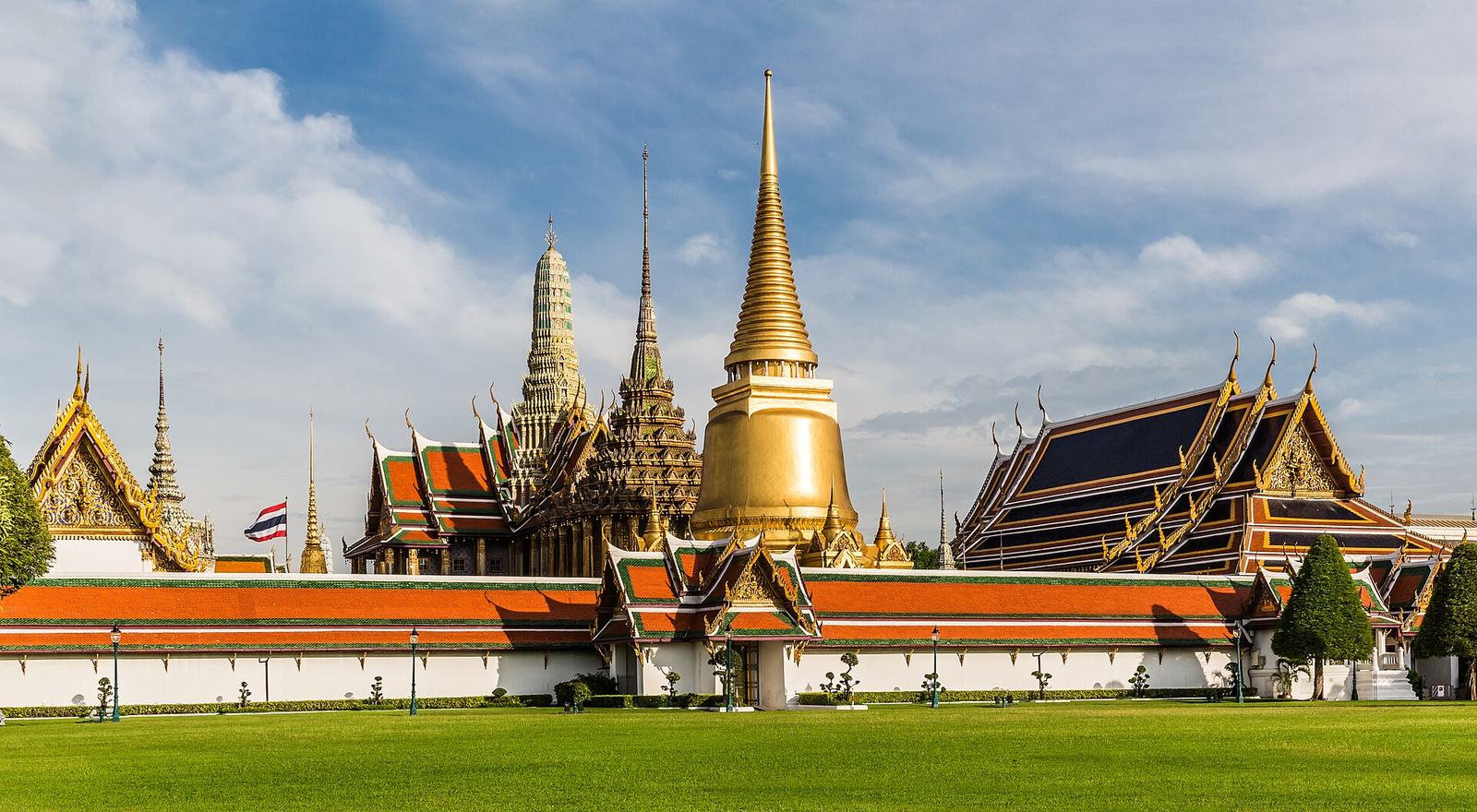

In 2026, Thailand remains one of the Asian destinations most often considered by those who want a pleasant way of life, a reputation for food and welcome, high-quality private care in Bangkok, and a daily cost often lower than in Western Europe — excluding international schools. People come first for that daily life, for Bangkok, Chiang Mai or the sea. Visas and tax, which have moved, come next, and they should be read as they now stand.
This guide describes lifestyle, the cities, the official purchase rules (with no listings average), schools, formalities and tax. For another Asian perspective, see our Malaysia and Singapore guides, and the article on buying in Dubai.
Lifestyle and everyday life
Bangkok is an intense, hot, contrasting capital, where temples, canals, shopping centres and skyscrapers intertwine. The BTS, the MRT and boats organise some journeys; cars and ride-hailing apps do the rest. English helps in international circles; Thai is essential for officialdom, many doctors and neighbourhood life. Food, street life and a calendar of festivals (including Songkran) structure daily life as much as work does.
Outside Bangkok, the country changes completely: Chiang Mai and the north have another pace, mountains, a creative scene, and seasonal air pollution (the “haze season”) to be taken seriously. Phuket, Koh Samui, Koh Tao or Hua Hin offer the sea, with a highly variable degree of tourism and services. A plan “in Thailand” without a choice of place has no content. Respect for customs, the monarchy and the legal framework is part of the contract; it is not an optional clause.
Where to live: Bangkok, Chiang Mai, the coast
Bangkok: Sukhumvit, Thonglor, Sathorn, the Riverside
Sukhumvit, from Asok to Ekkamai, Thonglor and Phrom Phong, concentrates a large part of international life, condos, schools and private hospitals. Sathorn and Silom are more “business”, the Riverside more residential depending on the building. Access to the BTS or MRT is a concrete criterion, as much as the size of the condo and the quality of the co-ownership — which is very uneven. The Lycée français international de Bangkok steers some families towards certain corridors.
Chiang Mai and the north
Chiang Mai attracts those who want often a lower cost, a more human-scale city, and access to the mountains. The international community there is already long established. You should visit in the dry season and in the haze season: air quality, in some years, weighs on health and daily life. Private care is decent; complex cases often go back to Bangkok.
Phuket, Koh Samui, other coasts
Phuket and Koh Samui appeal for the sea, with a more tourist property market, condominiums and villas whose legal status should be examined with particular rigour (land, again, is not in principle purchasable by a foreigner). Hua Hin, Pattaya and other coasts each have their public and their limits. The season, medical infrastructure and the school offer (if there are children) should be seen on the ground, not on a brochure.
Advantages and points to watch
Advantages
- A pleasant way of life, food, welcome, and a daily cost often lower than in Western Europe, excluding international schools.
- Very good private care in Bangkok, recognised in the region.
- The Lycée français international de Bangkok and international schools in Bangkok, Phuket and elsewhere.
- Several residence titles (including the LTR visa and retirement visas), to be read in their official version in force.
- A diversity of places: the capital, the north (Chiang Mai), islands and the coast.
Points to watch
- A foreigner cannot, in principle, acquire land: a purchase is mainly of a condominium unit, within the legal 49% quota.
- The tax treatment of foreign-source income remitted to Thailand has changed since 2024: it should be reviewed with an adviser, not on a memory of the old rule.
- The Thai language is essential for officialdom and parts of daily life; English helps, it is not enough everywhere.
- Heat, seasonal air pollution in Bangkok and Chiang Mai, and an intense tourist pace on some islands.
- Residence titles have precise conditions (means, insurance, duration) that change.
Property: land, condos, no listings averages
This page does not publish an average price drawn from portals. The essential point of law is this: a foreigner cannot, in principle, acquire Thai land. The most common and most readable purchase is a condominium apartment, within the legal quota — in practice, 49% of the building’s area may be held by foreigners. You should check that the quota is not already exhausted, and that the title is a genuine condominium title.
Other structures (a Thai company, a long lease) are sometimes proposed for villas. They carry real legal risks and should be examined by a Thai lawyer independent of the seller, not by the intermediary selling the property. That caution is not a detail.
Fees, transfer taxes and co-ownership rules fall under local law. Many new arrivals start by renting, while they get to know a neighbourhood and a building — a practice that is particularly sound here.
Schools and family life
The Lycée français international de Bangkok (LFIB), an AEFE-network school, is the French-speaking anchor. Admissions should be checked with the school. This page does not publish pupil numbers. International schools, in Bangkok, Phuket and elsewhere, complete the offer, often at high fees. The school-and-home pair is, in Bangkok, a commuting decision as much as a neighbourhood one. Family life also rests on condominiums with a pool, frequent domestic staff, and very good private hospitals in the capital.
How many French nationals in Thailand?
At 1 January 2025, the French Foreign Ministry’s voluntary register recorded 16,070 enrolments in Thailand, after 15,335 in 2024 and 12,974 in 2017. Since 2021 (13,117), the series has been trending upwards. Registration is voluntary: these counts understate the actual community. This page does not repeat higher totals sometimes put forward “according to some sources”, because no corresponding official figure is available.
Registration on the register of French nationals established outside France is voluntary. These official counts therefore understate the actual community. Source: French Foreign Ministry, community CSV files, registrations at 1 January.
Residency, formalities and healthcare
Several residence titles exist: the Long-Term Resident (LTR) visa, in its official categories (published by the Board of Investment and Immigration); retirement visas (non-immigrant O, according to the conditions in force); work-related visas; privilege programmes. Conditions on means, insurance, duration and the right to work differ sharply and have been adjusted several times. They should be read at source, at the date of your plans, and not in an old article.
Bangkok’s private hospitals are of a very good standard, recognised in the region, and a real argument for some families. Suitable insurance (hospitalisation, possible evacuation) remains essential. Outside Bangkok, the standard and the offer vary; a complex case often comes back to the capital.
Tax in 2026 — what is useful to know next
The Revenue Department administers income tax. The point not to miss is this: since 2024, the treatment of foreign-source income remitted to Thailand has changed. The old rule, still often cited, should no longer be taken as given. The practice, any transitional guidance and the law in force should be reviewed with a Thai adviser, at the date you settle. Tax treaties frame double taxation, within their respective scope.
If you leave France, the French exit tax on certain unrealised gains may apply. A departure outside the European Union does not, in principle, benefit from the automatic deferral available within the EU: guarantees or other conditions may be required. The impots.gouv.fr page (updated on 10 March 2026) is the starting point; a proposal to extend the period to fifteen years is not in force. Have your position reviewed by an adviser.
A Thailand plan should be built in this order: the place, a visa whose conditions are up to date, a home — often rented, or a condo whose quota and title have been checked — a school if needed, then a tax review that starts from the current rule, not the old one.
Frequently asked questions
How many French nationals live in Thailand?
At 1 January 2025, the French Foreign Ministry’s voluntary register recorded 16,070 enrolments in Thailand, after 15,335 in 2024 and 12,974 in 2017. The series has been trending upwards since 2021. Registration is voluntary: these counts understate the actual community. This page does not repeat higher totals sometimes quoted “according to some sources”, because no corresponding official figure is available.
Can a foreigner buy a villa with land?
In principle, no: Thai law does not allow a foreigner to acquire land. The most common purchase is a condominium apartment, within a legal quota (in practice, 49% of the building’s area reserved for foreigners). Other structures (a company, a long lease) exist and should be examined with extreme care, in light of the law and the risk. An independent Thai lawyer is essential. This page does not publish a listings average price.
Which visas allow you to settle?
Several titles exist, including the Long-Term Resident (LTR) visa in its official categories, retirement visas (non-immigrant O, according to the conditions in force), work-related visas, and privilege programmes. The conditions (means, insurance, duration, work rights) differ sharply and have been adjusted several times. They should be read on the Board of Investment, Immigration and embassy pages, at the date of your plans.
Should I be concerned about tax on foreign income?
Yes, in the sense that the rule has changed. Since 2024, the Revenue Department has changed the way foreign-source income remitted to Thailand is treated. The practice, any transitional guidance and the law in force should be reviewed with a Thai adviser, and not on the basis of the earlier rule, which is still often cited in error.
Where should I settle?
Bangkok (Sukhumvit, Thonglor, Ekkamai, Sathorn, the Riverside) suits a capital-city daily life, with the lycée and healthcare. Chiang Mai offers another pace, often a lower cost, and seasonal air pollution to anticipate. Phuket, Koh Samui and other coasts attract for the sea, with a more tourist market and services that vary with the season.
Where can children go to school?
The Lycée français international de Bangkok (LFIB), an AEFE-network school, is the French-speaking anchor. Other international schools exist in Bangkok, Phuket and elsewhere. Admissions should be checked with the schools. This page does not publish pupil numbers.
Are you thinking of moving to Thailand?
Leave your details and we can talk through the practical side of your plans — city, housing, schools, formalities. A personal conversation, with no obligation.